
Close and return to Sprintbase Launch in Sprintbase
Empathy Map

Empathy Map

When to use it

Use this tool to help you summarize your learnings about your users’ needs and pain points by stepping into their mindset after doing field research.

What’s the purpose

Empathy maps are a great way of gaining a deeper, more holistic understanding of how our users experience things. In order to truly empathize with your user’s needs, you must consider not just what they say, but also what they think, feel and do. This activity will help you to identify the true, underlying needs of the users you are designing for by visualizing and analyzing their actions and thoughts.

How to do it

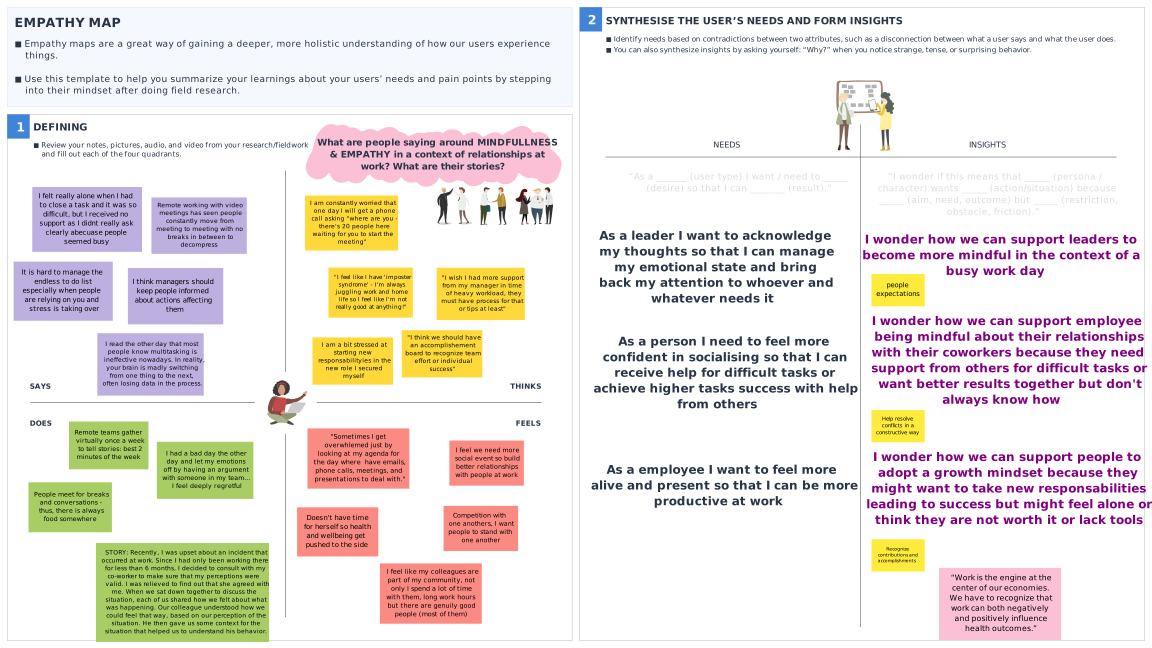
  1. Begin by populating each quadrant in step one of the ‘Empathy map’ template with observations, traits and quotes that you’ve collected on your users.
  2. Now, use step 2 of the template to interpret your findings. In the first column, try to identify your user’s needs by asking yourself what activities the user needs help with – either physically or emotionally. These might be explicit, but can also be inferred.
  3. Finally, fill in the second column with any insights you have. Look for contradictions within one or more quadrants in step one of the template and ask yourself why that might be. What new realizations emerge?

Download a high-res PNG to print or use with your favorite digital whiteboarding tool.
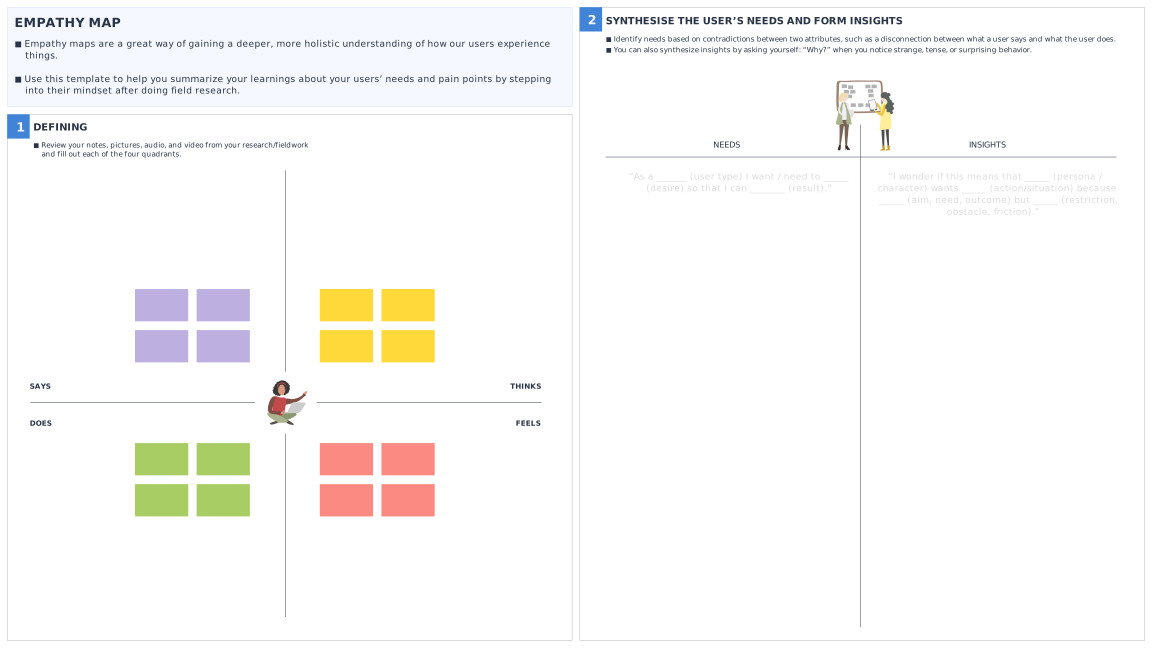
Blank Empathy Map Template
Completed Empathy Map Template Example Worked example
Helpful tips

Helpful tips

  • Pay attention to contradictions – these can offer revealing clues!
  • Try not to make assumptions and rather focus on real data. It will help you ensure that your solutions are focused on true user needs.
  • Use your Empathy Map as background to help you construct personas.

Using this method in your day-to-day work

Using this method in your day-to-day work

If you work with customers regularly, or you’re looking to improve how your colleagues work together, it can be really helpful to see a situation from the other person’s perspective. In addition to taking notes from a conversation or meeting, try using an empathy map to help you see the situation through someone else’s eyes. This understanding can really help you to unblock obstacles and find new remedies to every day work issues.

 Close

Studio 34, RIVERSIDE BUILDING, 55 Trinity Buoy Wharf, London, E14 0FP

Have a question? Email us at [Please enable javascript to see this email address].