Close and return to Sprintbase Launch in Sprintbase
Fly on the Wall Observations

Fly on the Wall Observations

When to use it

Use this tool to get insights into what people value and need by capturing observations about how they behave in everyday life.

What’s the purpose

Observing or people-watching in a setting or location that’s relevant to your design challenge allows you to see how people engage with the world around them in reality, rather than making assumptions. These real in-the-moment situations can provide us with loads of insight and inspiration.

How to do it

  1. In the first column in step one of the template, make a list of the activities, behaviors, and emotions you're looking to explore in more detail. This might be an activity specific to your user, or more general like ‘waiting in line’ or ‘paying’.
  2. Next to each thing on the list, write down a setting or situation where you might observe this activity, behavior, or emotion and when you will do it.
  3. Capture notes in step two on the template as you do your observations. Use the questions as guidance and add your own.
  4. After your visits, study your observations and look for interesting patterns, connections things that contradict your assumptions. Capture your insights in step three.

Download a high-res PNG to print or use with your favorite digital whiteboarding tool.
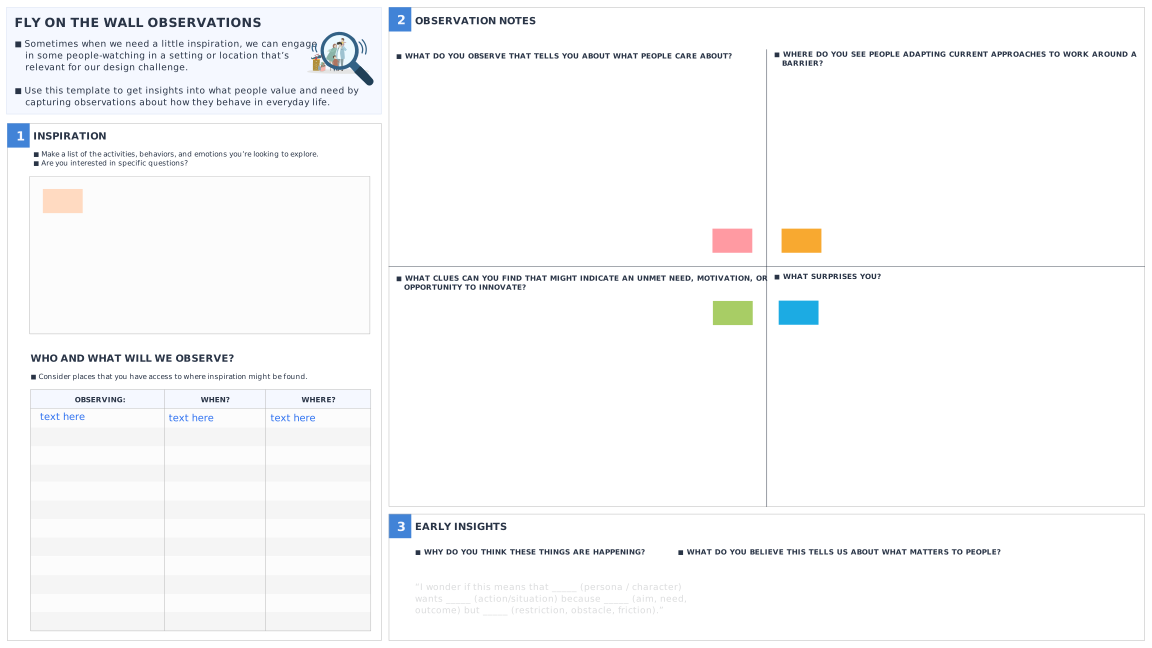
Blank Fly on the Wall Observations Template
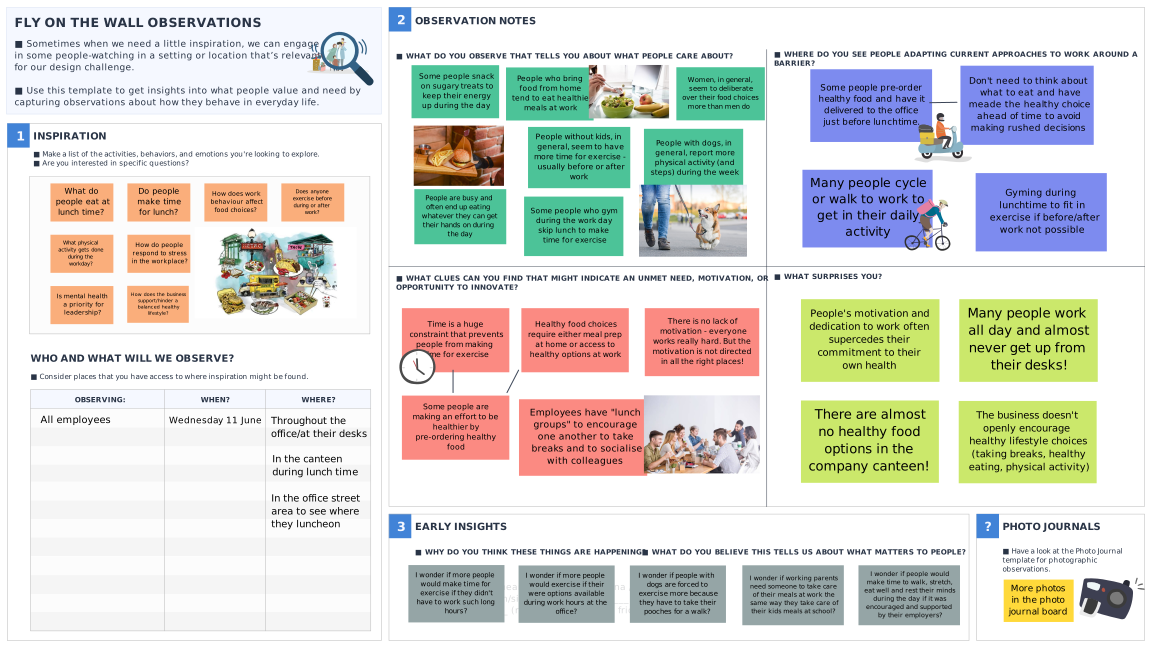
Completed Fly on the Wall Observations Template Example Worked example
Helpful tips

Helpful tips

  • When you make your visits, remember to keep a beginner’s mindset and look at the wider context for more inspiration. If you want to talk to the people in that setting you can use the interview tools.
  • Photo journals are a great way to capture evidence of your observations. You can find guidance for this under the ‘Photo Journal’ template.
Using this method in your day-to-day work

Using this method in your day-to-day work

We’re often so busy working that we don’t get the time to notice what’s going on around us with our teams, our working environment and our working practices.

If you’ve noticed something at work that isn’t functioning as smoothly as it could be, then allocate some time and use this method to be the ‘fly on the wall’ and observe what’s happening. The trick is to be totally impartial while you're doing this and simply observe and take notes. How are people behaving? How are they working? What challenges are they experiencing? What you learn will help you test your hunches and perhaps even find ways to do something about it.

 Close

Studio 34, RIVERSIDE BUILDING, 55 Trinity Buoy Wharf, London, E14 0FP

Have a question? Email us at [Please enable javascript to see this email address].