
Close and return to Sprintbase Launch in Sprintbase
Interview Planner

Interview Planner

When to use it

Use this tool to help you plan a meaningful interview and listen for any signs of joy, pain, frustration or unmet needs.

What’s the purpose

Interviewing your users allows you to hear directly from the people you are designing for, in their own words. It helps you to understand your users’ behaviors and feelings in relation to your challenge through empathetic conversation and observing them in the places where they live and work.

How to do it

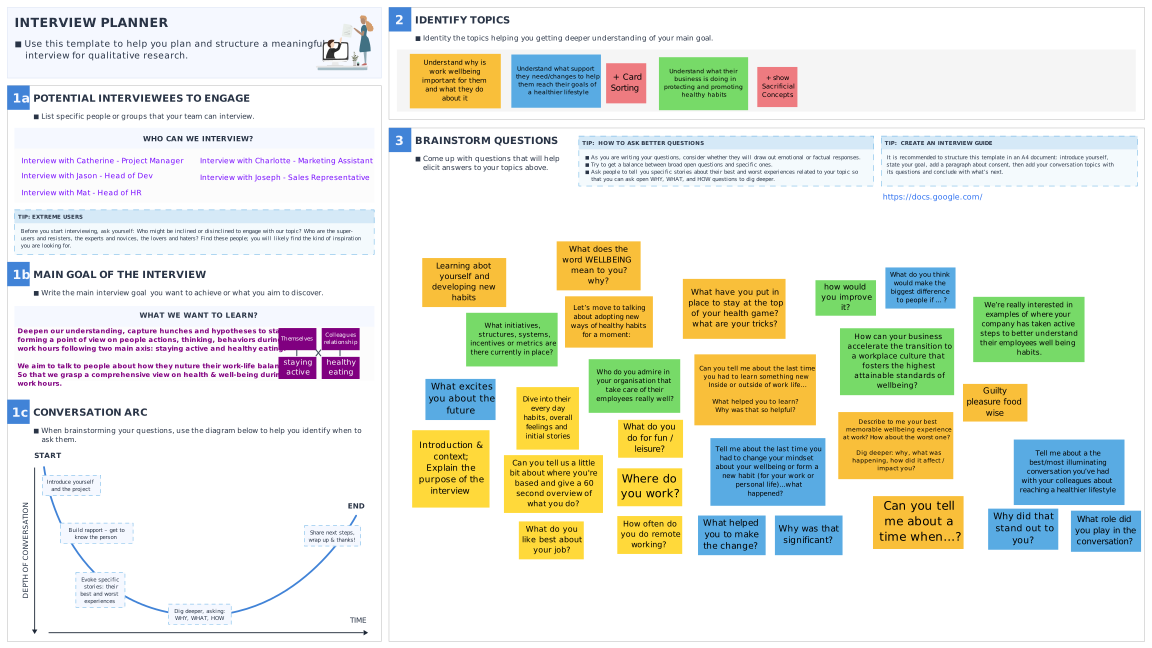
  1. In step one of the ‘Interview Planner’ template, start by answering the following question: Who can I speak with to help me better understand my challenge from the user’s perspective? Consider extreme users (copy them across if you’ve defined them already), friends and family, complete strangers, and users of a particular service or product. Write down specific names of people you can talk to.
  2. Next, write down the key objectives of your interview. Think about what you are aiming to achieve and discover through the conversation.
  3. In step three, reflect on the conversation arc diagram to help you plan the flow of your discussion and think about some questions you might like to ask.
  4. Now, try to define 2-3 specific objectives that you’re aiming to achieve in each section of the conversation to help you gather meaningful feedback.
  5. Finally, write down your questions and place them in the funnel in step four. Start with more general topics and work towards more specific and emotional questions as you build trust.

Download a high-res PNG to print or use with your favorite digital whiteboarding tool.
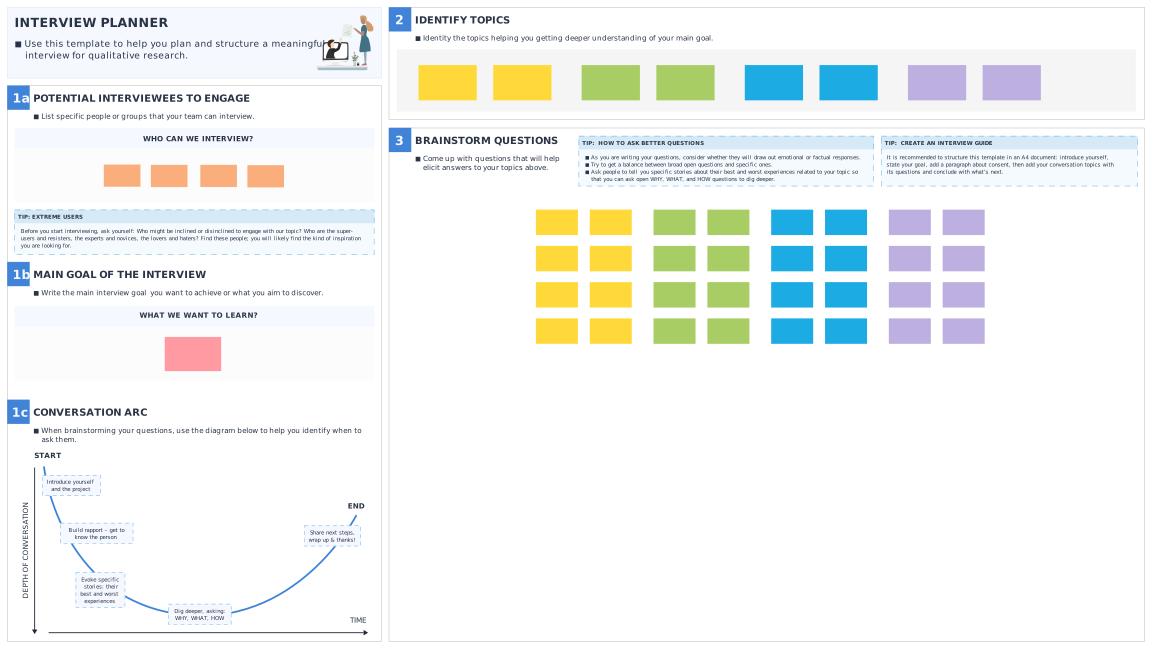
Blank Interview Planner Template
Completed  Interview Planner Template Example Worked example
Helpful tips

Helpful tips

  • Don’t plan your conversation too much. Allow for flexibility as the discussion unfolds naturally. This is often when you gather the most interesting information.
  • Ask people to tell you specific stories about their best and worst experiences related to your topic. Listen closely and ask open WHY, WHAT, and HOW questions to dig deeper.
  • It can be helpful to have two people in an interview, one to ask the questions and the other to capture notes.
  • You might want to transfer your objectives and questions to a document with some introductory text to help guide you through the interview.

Using this method in your day-to-day work

Using this method in your day-to-day work

  • Not every conversation is an interview, but this tool can be used to help you have better conversations at work. Better conversations lead to better understanding and greater collaboration. If perhaps you need an outside perspective on something you are working on, use steps 1 -3 to help you to identify whom you could speak to and what you might want to ask them.
  • Alternatively, when you have an important conversation coming up at work, using steps 4-6 of this process can help you make sure you have clear objectives for the conversation and some great questions to lead with.
 Close

Studio 34, RIVERSIDE BUILDING, 55 Trinity Buoy Wharf, London, E14 0FP

Have a question? Email us at [Please enable javascript to see this email address].