When to use it
Use this tool to visualize and make sense of how a customer or user experiences a service by mapping out the interactions and relationships between different components.
What’s the purpose
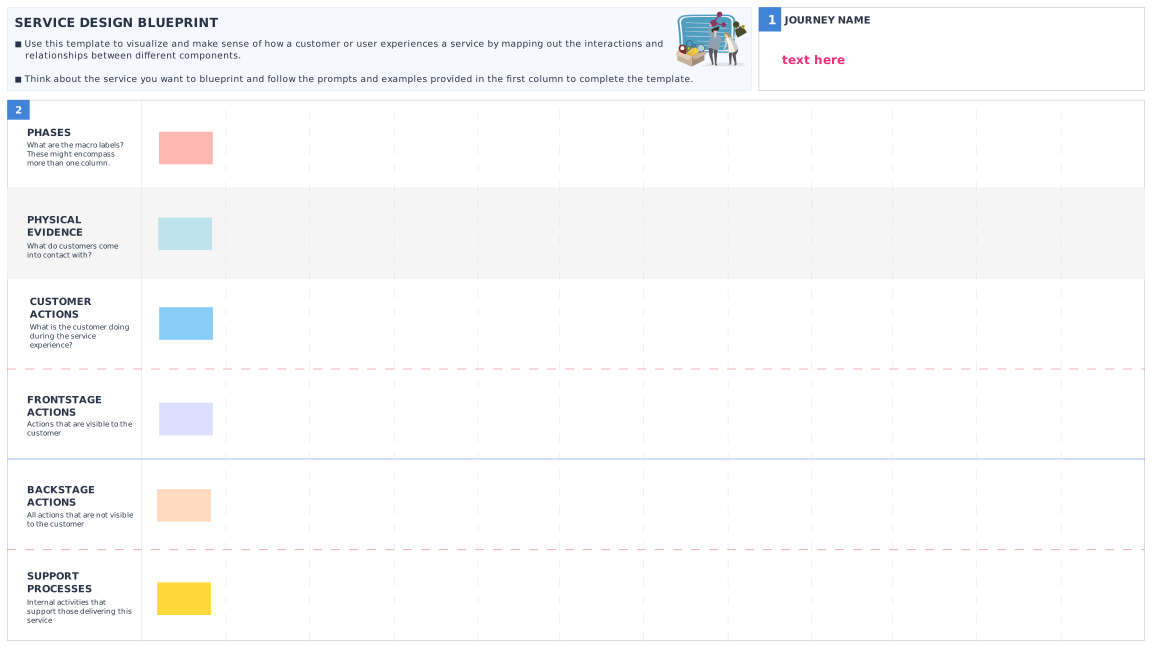
A ‘Service Design Blueprint’ helps you to understand how a customer moves through the journey of engaging with your service by mapping out the interactions and relationships between different components.
How to do it
- Start by giving your journey a name.
- Using the example provided in the template and the guidance below, complete each row in the blueprint:Phase labels: These should be macro labels that might encompass more than one column. E.g. Explore and select an airline, check-in and boarding, in-transit, after journey.
Physical evidence: In this row, outline anything that the user comes into contact with along the journey. E.g. a website, a phone call or a concierge clerk.
Customer actions: Here you will map out the steps that the user themselves takes as they move through the journey of using or engaging with your service.
Frontstage actions: These are actions that occur during the service journey that CAN be seen by the user. E.g. ‘clerk checks customer bags in’.
Backstage actions: These are actions that occur during the service journey that CANNOT be seen by the user. E.g. ‘the customer’s bags are delivered to the airplane’.
Support processes: These are internal activities that support those who are delivering the service. E.g. the airline check-in system records that the customer has checked in and has two bags.