Shape of Results
When to use it
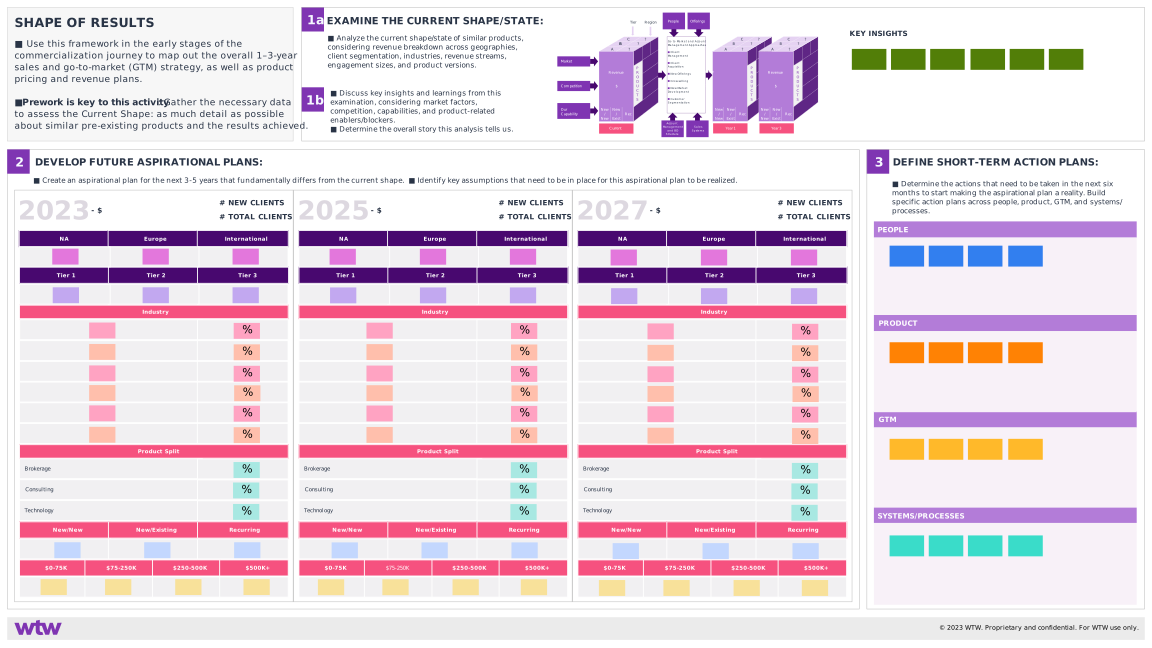
The Shape of Results (SoR) planning process is a valuable tool used in the early stages of the commercialization journey to map out the overall 1–3-year sales and go-to-market (GTM) strategy, as well as product pricing and revenue plans. This instructional guide will provide a step-by-step approach to utilizing the SoR planning process effectively.
The SoR planning process is most beneficial when you start developing high-level sales and GTM strategy, pricing, and revenue plans. During the early stages of commercialization, it is essential to gain alignment, buy-in, and excitement for what is possible.
What’s the purpose
The Shape of Results (SoR) represents the envisioned outcomes of the planning process. It provides a clear picture of the anticipated results and serves as a guide for future actions. It is important to revisit and review the Shape of Results every quarter. It serves as a tool for leadership to inform, engage, excite, and drive accountability.
Creating the SoR is foundational, it helps to:
- Foster alignment, collaboration, and engagement with key team members and stakeholders for what lies by creating a shared understanding of what is possible.
- Build a comprehensive sales strategy based on data, analysis, market research, trends and insights from past experiences.
- Involve a team of key stakeholders in building aspirational plans together, leveraging their expertise and diverse perspectives.
- Determine the necessary resources and funding to execute the plan effectively.
- Create a framework and plan that can be cascaded across the organization.
How to do it
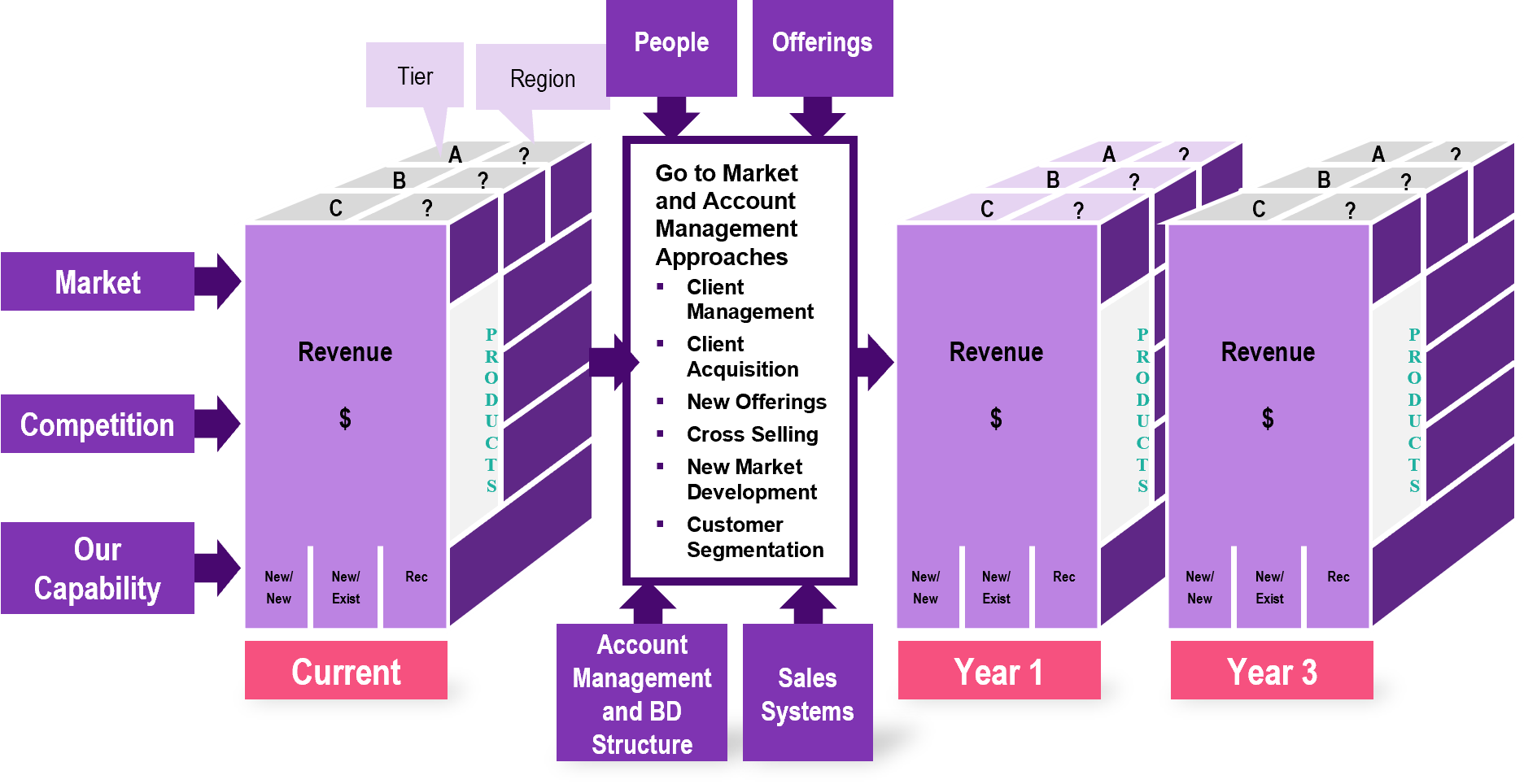
- Examine the Current Shape/State:
- Choose a product that is similar product and/or has had a similar pathway to market.
- Analyze its current or past year revenue breakdown across several lenses including geographies or markets, client segments, industries, product offerings, size of engagement, cost of sale, number of sellers required to achieve those results, win/loss ratios, revenue streams, etc. This will provide you with a good idea of what the current Shape of Results looks like.
- Discuss key insights and learnings from this examination, considering market factors, competition, capabilities, and product-related enablers/blockers. Determine the overall story this analysis tells us.
- Develop Future Aspirational Plans:
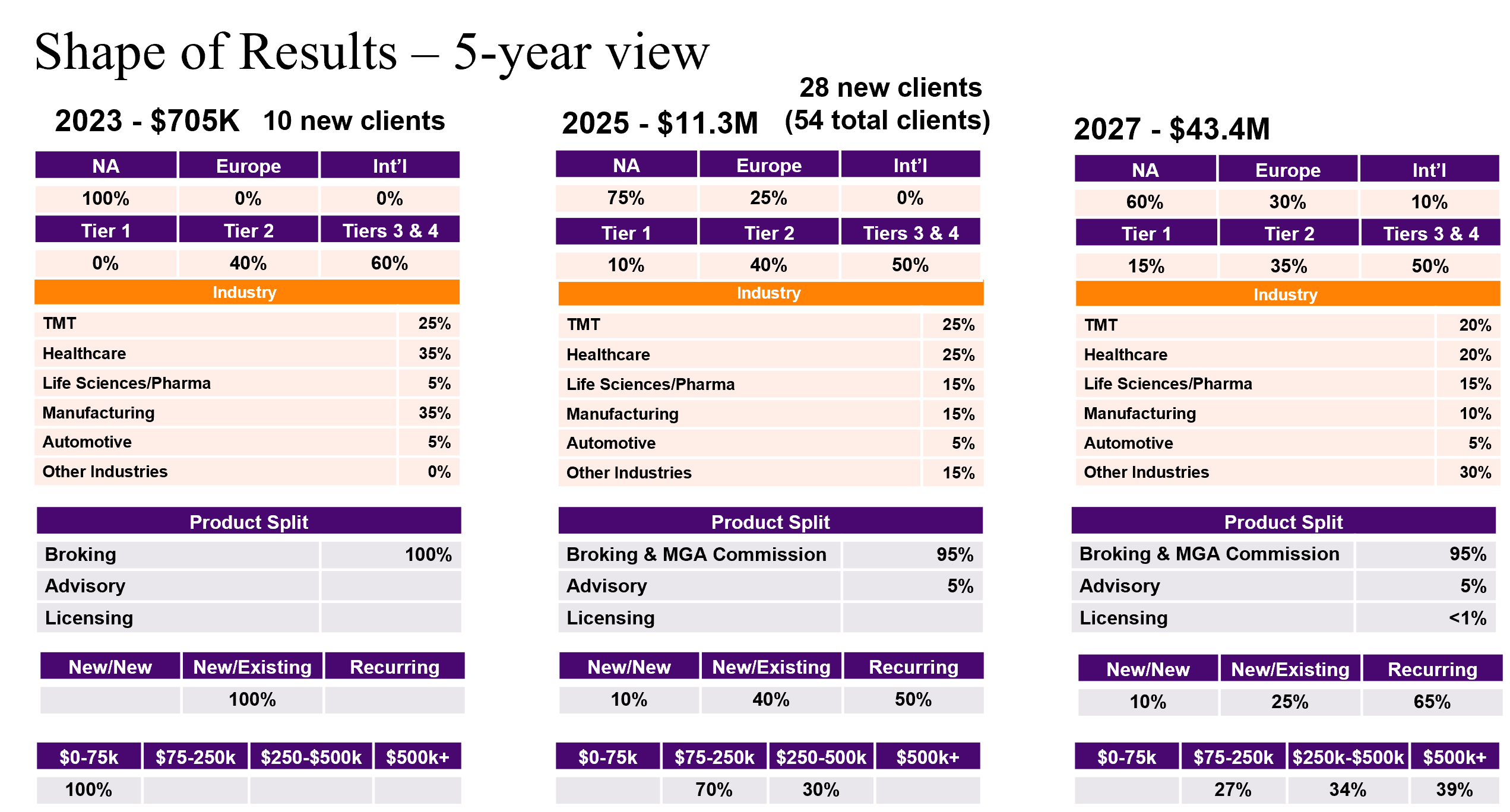
- Create an aspirational plan for the next 3-5 years that fundamentally differs from the current shape. How is it different from the current shape? Ask yourself: "is this future state aspirational and desirable?"
- Map the key assumptions that would have to be in place for this the be achieved around the key areas of people, capabilities, delivery resources, Distribution, ongoing product development, and sales processes.
- Define Short-term Action Plans:
- Determine the specific actions required in the next 6 months-12 months and what the year 1 shape of results should look like to start making your aspirational plans a reality.
- Collaborate with your team to build out action plans across key areas: targeting clients, people, solution development, and sales processes.
- Map out the communications plan:
- Explore how the plan will be cascaded to gain alignment, excitement and engagement and most importantly, to whom.