Commercial Approach and Implementation Plan
When to use it
Once you have obtained full funding and approval to proceed with the development of your idea. Typically, this occurs after completing any earlier testing phases of the idea AND after building out your high-level revenue plans through Shape of Results planning and your initial client targeting through The Match processes.
What’s the purpose
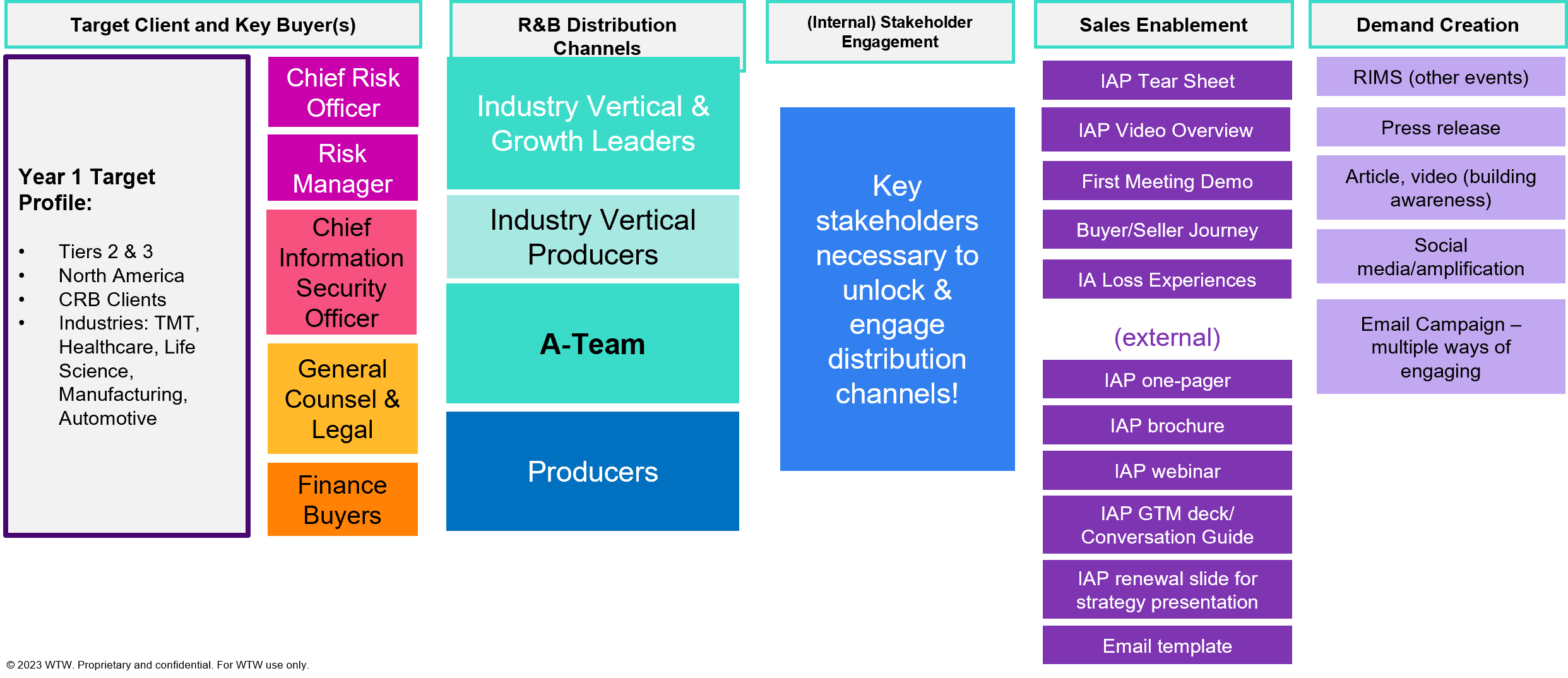
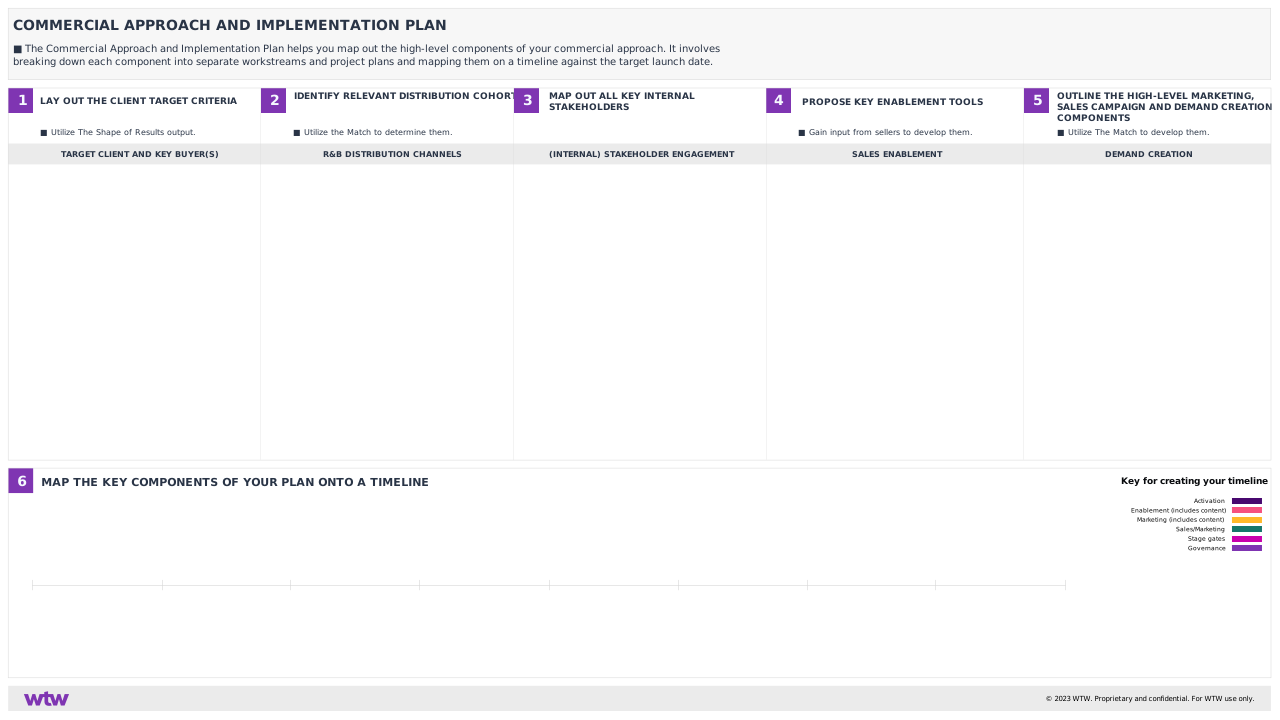
The purpose of the Commercial Approach and Implementation Plan is to create a targeted strategy for your clients and distribution by mapping out the high-level components of your commercial approach.
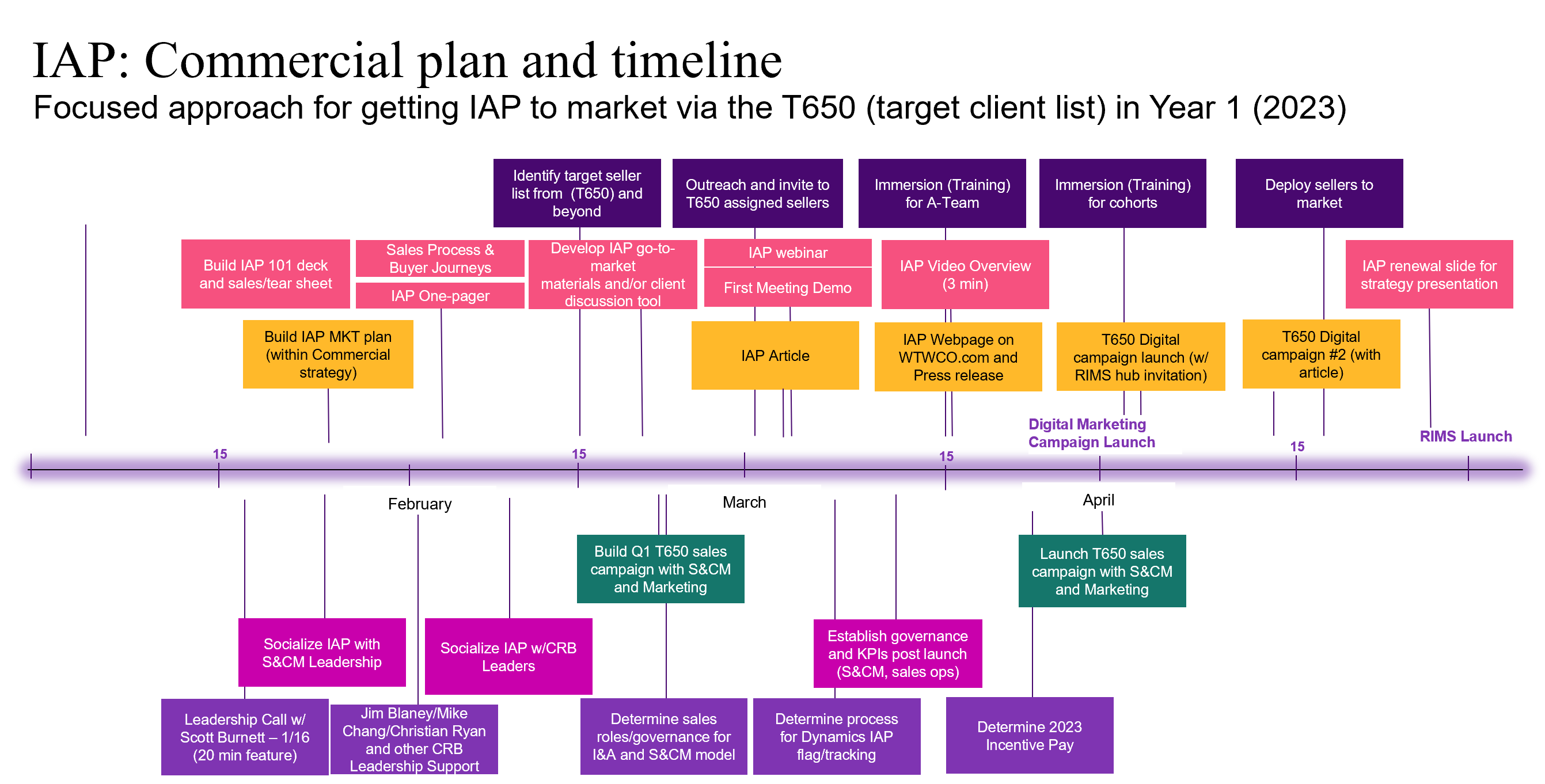
It starts by mapping out the high-level components of your commercial approach and then breaking down each component into separate workstreams and project plans, aligning them on a timeline leading to your target launch date. By doing so, it ensures that you have a targeted approach to clients and distribution, rather than casting a wide net and expecting all market-facing colleagues to sell. It also encourages your teams to consider all the interconnected moving parts and work backwards to create a plan.
Furthermore, it helps you identify the key internal stakeholder groups and emphasizes the need to adjust external messaging, materials, and positioning based on factors such as industry, geography, client segmentation, and client roles.
How to do it
Let's explore how to effectively map out your Commercial Approach:
- Begin by defining your list of targeted clients based on qualifying criteria which should be derived from the Shape of Results output.
- It should define which markets, industries, client segments that would have the most urgent and relevant need for our product and those that are easiest for us to approach because of our existing relationships, brand permission and credibility.
- Identify the specific targeted client buyers, using insights from both Shape of Results and The Match. What roles do they have in the client organizations? Have we considered those that might help us get to that target buyer?
- Based on the clients and buyers we have targeted, who will be the appropriate distribution/selling cohorts? Use The Match to build out distribution cohorts.
- Map out all of the key internal stakeholders that we will need to provide awareness, gain support, approval, and investment in time from, drawing from both the Shape of Results and The Match processes.
- Carefully consider all of the people and teams that will be critical to success including marketing, legal, finance, sales ops, S&CM, LRMS, leadership, distribution, management, product leaders etc.
- Consider what key enablement tools and immersion training will be required to empower your sellers to go to market, utilizing The Match to develop them.
- Outline the high-level marketing and demand creation components that will drive awareness and engagement.
Implementation Plan:
Remember to think strategically and outline the necessary steps for successful commercialization. This plan will serve as a roadmap for your project's execution.
- Create the implementation plan that maps out against each of the components you’ve built in the Commercial Approach.
- Consider how we will execute the plans for the distribution channels, internal engagement, content creation, marketing/sales campaigns, and enablement activities.
- Evaluate the required investments and resources to implement your commercial plan effectively.