Commercial Considerations
When to use it
The Commercial Considerations framework should be utilized after completing the SoR (Shape of Results) planning and the development of the Match and the Narrative. These prior steps ensure that you have a solid foundation and understanding of your project before assessing commercial aspects.
What’s the purpose
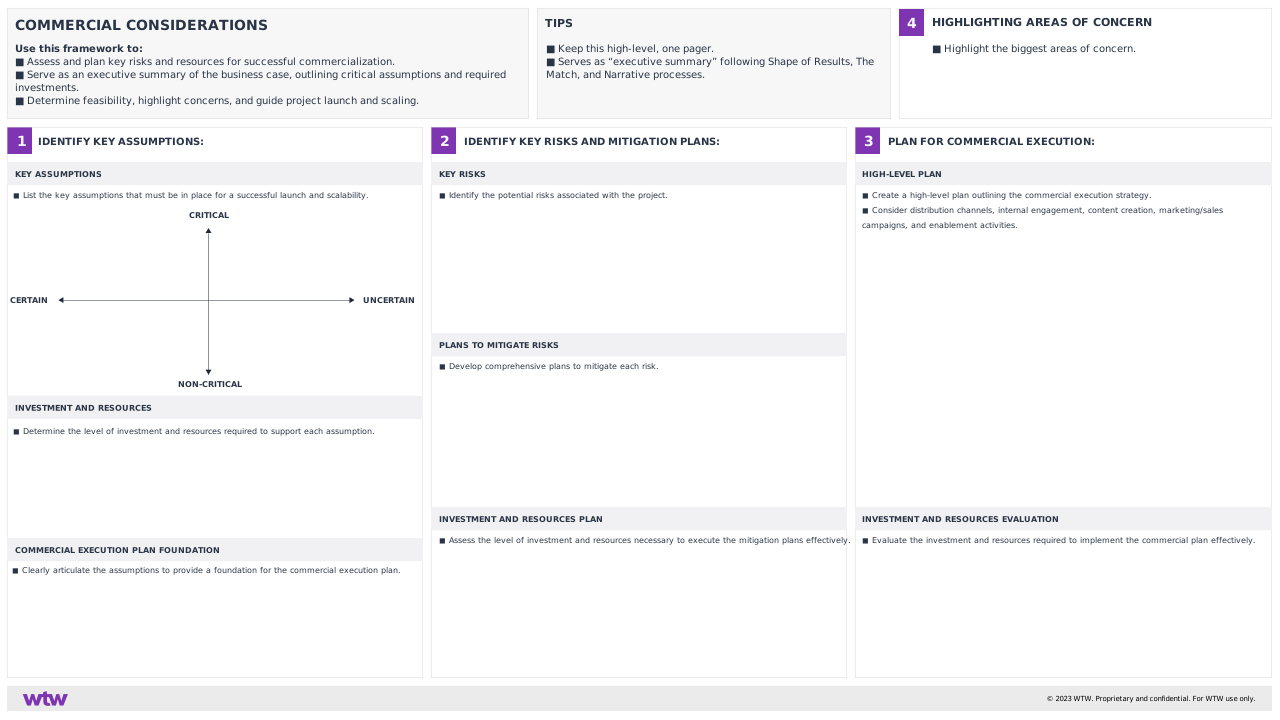
The Commercial Considerations framework is to identify key assumptions and required resources for successful launch and commercialization. The considerations act as a go/no go tool, where assumptions are outlined, and risks are identified to ensure proper mitigation planning. It serves as an executive summary for the business case, identifying critical assumptions and outlining the required investments and resources. The tool helps determine the feasibility of launching and scaling a project while highlighting areas of concern that require attention.
By utilizing this framework, you can make informed decisions about your project's commercial viability, address potential risks, and allocate resources effectively. Remember, the Commercial Considerations framework is most effective when used after completing the Shape of Results planning, the development of the Match, and the Narrative. Take the time to assess your assumptions, identify risks, and plan for successful commercial execution.
How to do it
- Identify Key Assumptions:
- List the key assumptions that must be in place for a successful launch and scalability.
- Determine the level of investment and resources required to support each assumption.
- Clearly articulate the assumptions to provide a foundation for the commercial execution plan.
- Remember to be clear and specific when articulating each assumption. This will provide a clear view of what is needed for success.
- Identify Key Risks and Mitigation Plans:
- Identify the potential risks associated with the project.
- Develop and consider various scenarios and develop comprehensive plans to mitigate each risk.
- Assess the level of investment and resources necessary to execute the mitigation plans effectively.
- Be thorough in evaluating each risk and its corresponding mitigation plan. This will help you address potential obstacles and minimize their impact on your project's success.
- Plan for Commercial Execution:
- Create a high-level plan outlining the commercial execution strategy.
- Consider distribution channels, internal engagement, content creation, marketing/sales campaigns, and enablement activities.
- Evaluate the investment and resources required to implement the commercial plan effectively.