Stakeholder Engagement
When to use it
Stakeholder engagement is crucial for companies that are launching new products. Use this framework as soon as the project is being funded and the Match is complete, in parallel with the Commercial Approach and Commercial Implementation plan.
What’s the purpose
The objective of this aspect of commercialization is to secure stakeholder support for a successful product launch and scale. The key deliverable is ensuring alignment across all business levels, enabling coordinated adoption of the product, marketing, and sales execution. Effective stakeholder engagement and communication are crucial to address concerns and gaining support for a smooth launch and successful product adoption.
How to do it
- Identify stakeholders:
- Stakeholders can be both internal and external, individuals or groups who have an interest or influence in your product.
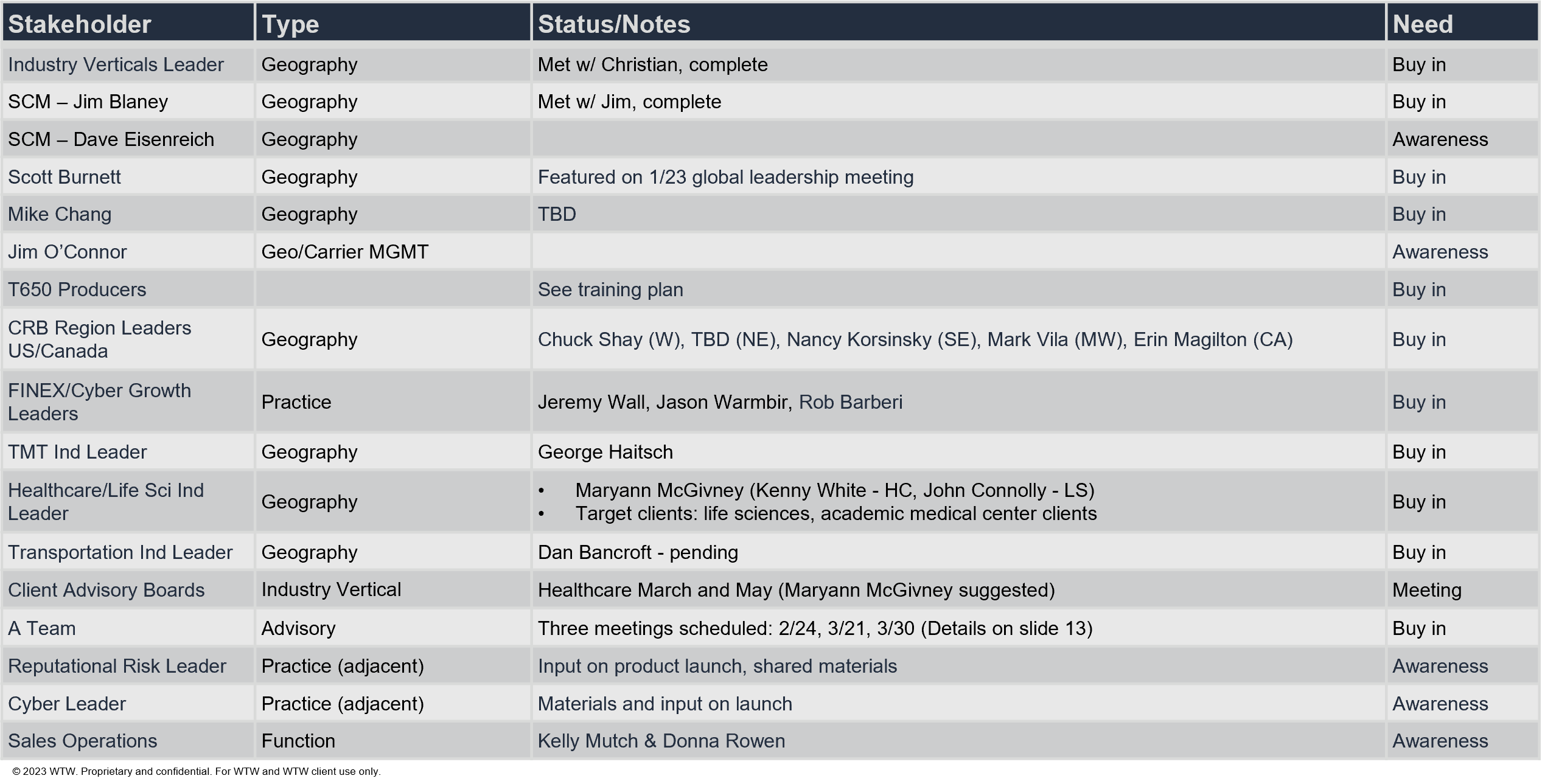
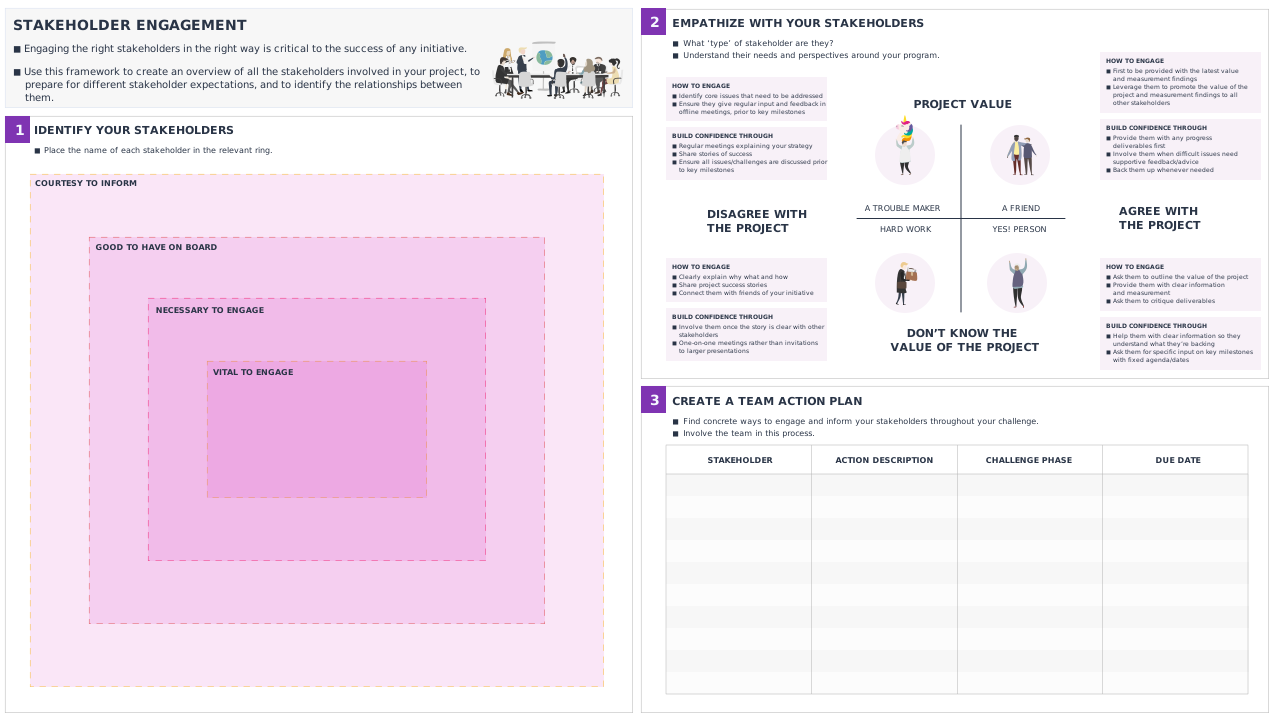
- In step one of the ‘Stakeholder Map’, identify all the stakeholders involved in your product launch by name, placing them in the relevant ring across the following categories: vital to engage, necessary to engage, good to have on board, and courtesy to inform. These may include internal stakeholders (e.g. marketing, sales, engineering) and external stakeholders (e.g. customers, partners, vendors).
- Start by listing the stakeholders' names and placing them in the relevant ring across the following categories: vital to engage, necessary to engage, good to have on board, and courtesy to inform. This categorization will help you prioritize your efforts later on.
- Prioritize stakeholders:
- Once you have identified your stakeholders, it's time to prioritize them based on the level of involvement that they have or will need to have to make the product launch a success.
- Use the project value/agreement chart in step two to effectively map out your stakeholders and identify which type of stakeholder each person is as well as where they sit on the axes.
- Consider the level of agreement or alignment each stakeholder has with your product launch and also evaluate the value they bring to the project. This exercise will help you understand which stakeholders require more attention and resources to ensure their engagement and support. Make sure to record your notes!
- Create your action plan.
- This plan will outline specific actions that will help build confidence and support from your stakeholders.
- Start by using the suggestions provided on the template as a starting point. Customize these suggestions to suit your unique situation and add any additional actions you feel are necessary.
- The goal is to have a clear roadmap of steps you will take to engage each stakeholder effectively.
- Set up meetings:
- Meetings are crucial to engaging stakeholders. Schedule individual or small group meetings, as appropriate, with stakeholders to introduce your product, discuss how it will benefit them and build buy-in.
- During these meetings answer questions, solicit feedback and bring the stakeholder into the fold. More often than not, your stakeholders will help support your product launch in various ways. Start to establish joint goals and reasonable expectations around their engagement and priorities.
- Make sure to share your materials, such as marketing plans, product details, and lists of other stakeholders they will be collaborating with as appropriate. This will provide them with the necessary information and context to fully understand the product and their role in the launch.
- Track Outcomes and Feedback:
- Collecting feedback from stakeholders and establishing responsibility for the next steps is essential for a successful product launch. During your meetings and interactions, actively listen to their perspectives and identify any blind spots or additional stakeholders that need to be involved.
- Incorporate the feedback you receive into your planning and adjust the product launch plan accordingly as concerns are raised.
- Partner with stakeholders:
- Now that you’ve got buy in and alignment, it’s time to start partnering. Different stakeholders will bring different capabilities that you will need in order to successfully launch.
- Partner with stakeholders to help promote the product launch and gain their support. Leverage their networks to reach a broader audience and increase visibility.
- Communicate continuously and strategically:
- Communication is vital throughout the entire product launch process. Keep stakeholders informed about milestones achieved and progress made. Regularly update them on any risks that arise and how you are addressing them.
- Additionally, make sure to communicate problems or roadblocks and solutions as necessary.
- Many methods of communication work; a recommendation would be meeting your stakeholders where they are by doing what works best for them. It can be through email updates, progress reports, scheduled meetings and beyond.
Using the suggestions around how best to engage with these types of stakeholders as a starting point, complete the action plan in step three to outline specific actions that will help to build confidence in the stakeholder.